
As this unprecedented year draws to a close, it’s a good time for reflection.
I heard Dr Rachel Payne talk online recently and I liked her analogy of the impact of the Covid19 situation in terms of learning, unlearning and relearning. Although she refers to this in relation to education, we can relate it to every day life and in my case my own practice.
She describes a pre-covid situation, that is normal and functioning, which is then shredded, with normality deconstructed and everything suddenly changed. Then what appears is the ‘new normal’ where we have to reconstruct and relearn things…such as a new way of life and a new way of working.
So how do we return to the pre-covid normality once it has been deconstructed and the entire identity changed? Can we return? Will life as we know it ever be the same again?
Through this pandemic we seem to have entered a ‘liminal space’ where a transformation has taken place. It’s like we are literally standing on the threshold between two realities. Liminal spaces tend to be transitional, transformative spaces, where they are the waiting areas between one point in time and space and the next. Often, when we are in liminal spaces, we have the feeling of just being on the verge of something. The time between the ‘what was’ and the ‘next.’ A place of transition and not knowing…. an area of the unknown.
Certainly with regards to my own practice and life in general, I am hoping to find a way to navigate through this liminal space and emerge transformed.
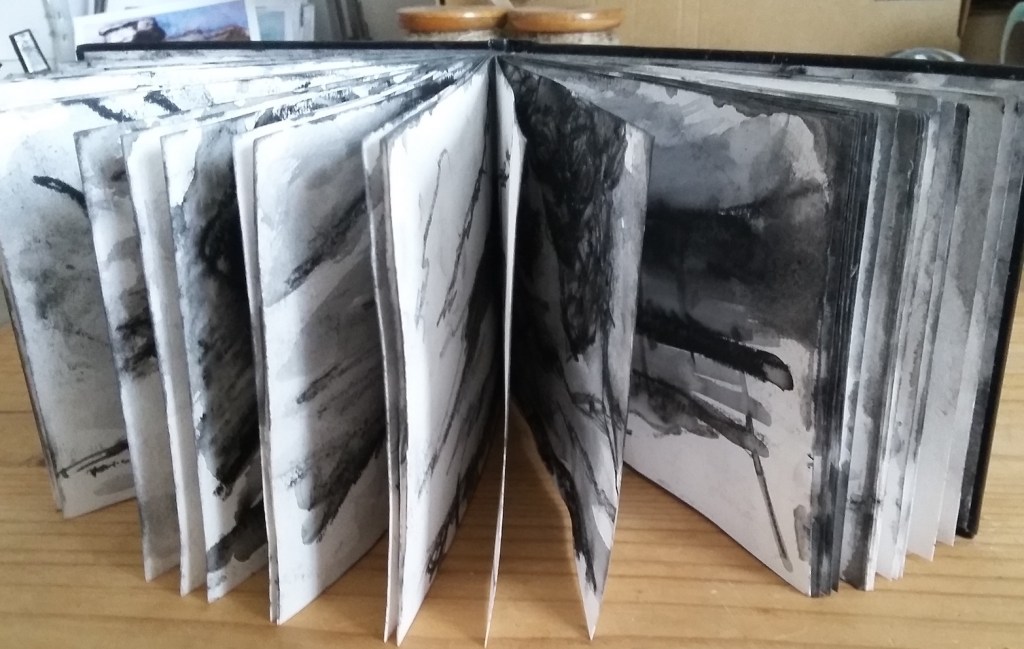
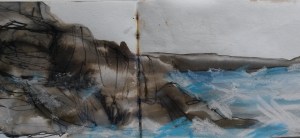
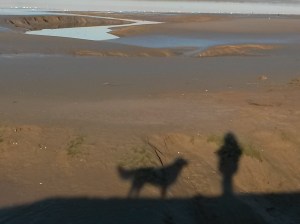
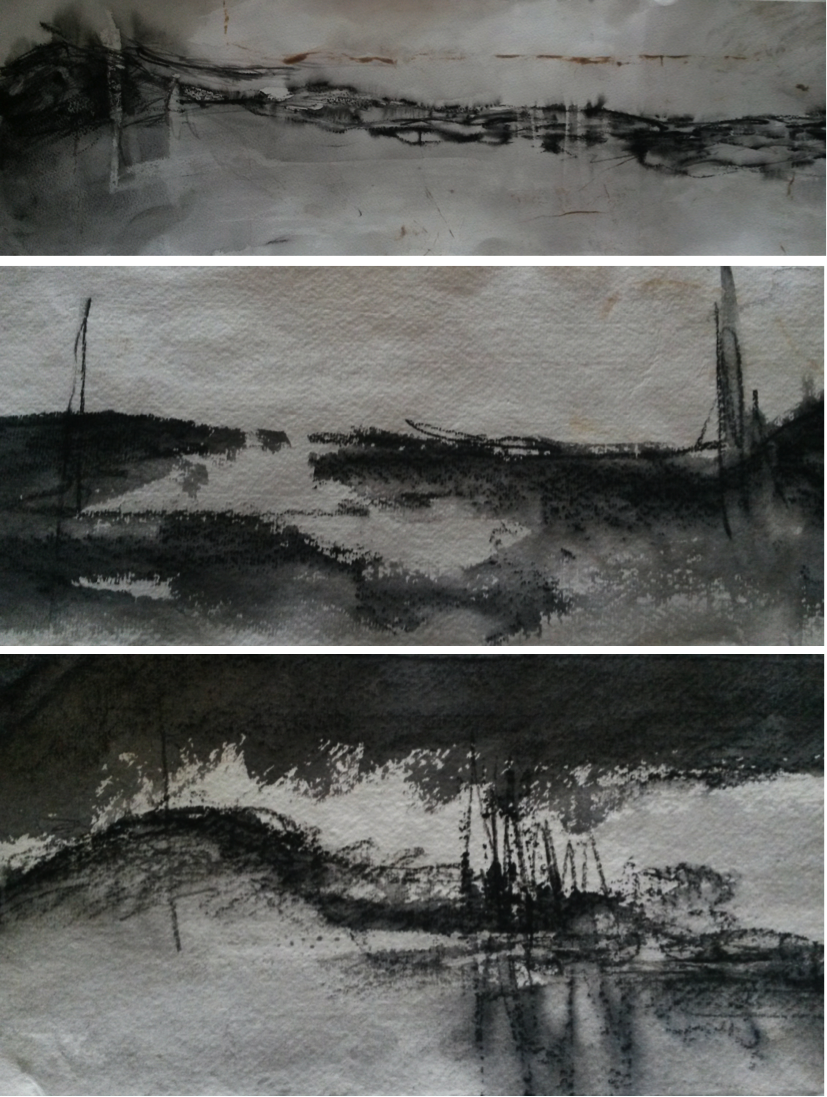
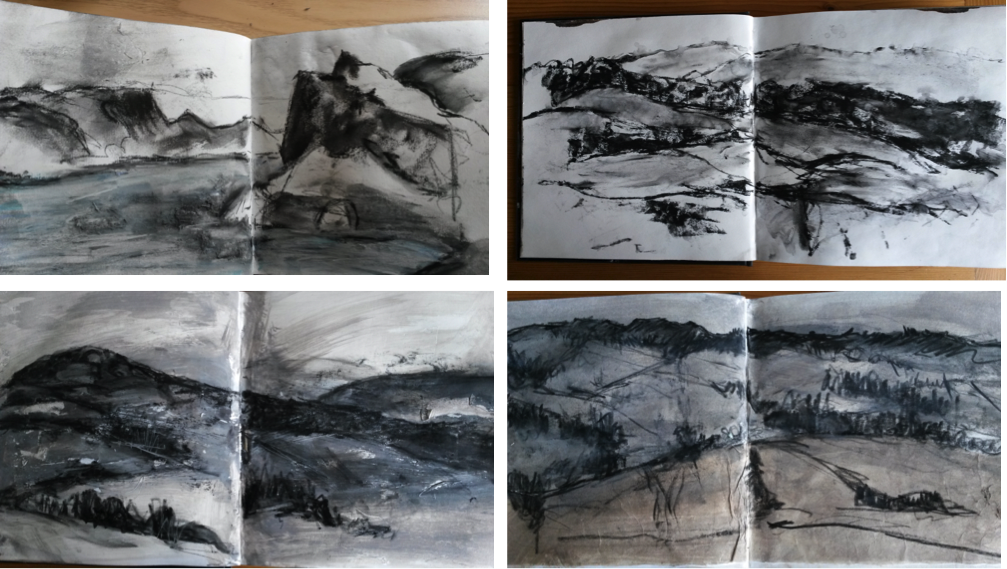
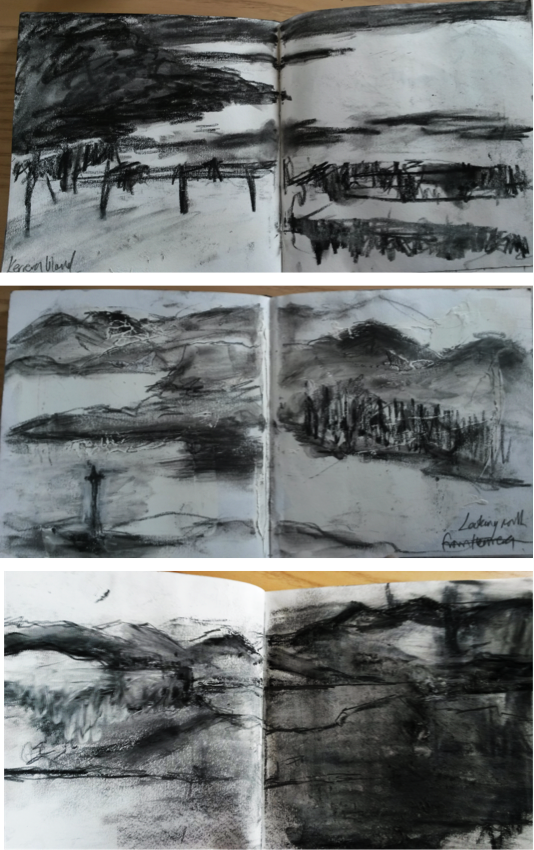
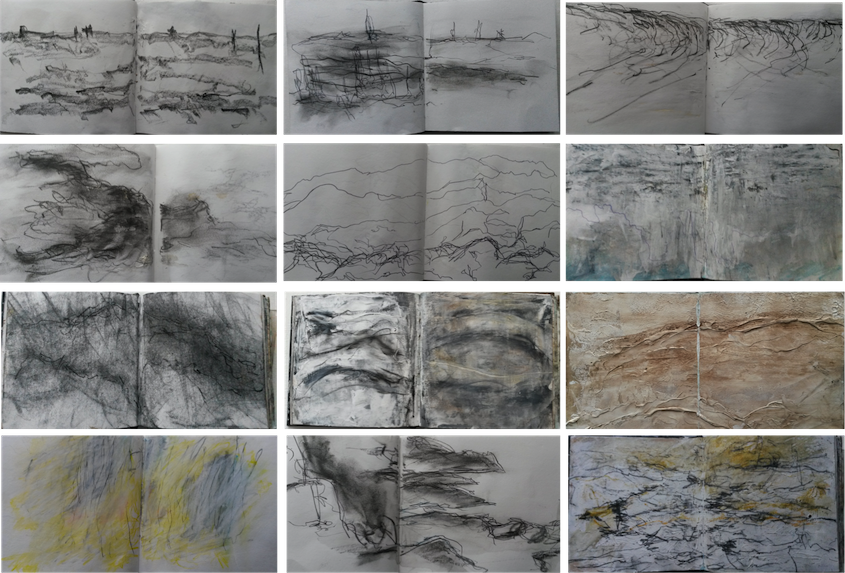
In trying to make sense of this ‘new normal’ and adjust to it, I have found it challenging to be creative. The most I could motivate myself to do was to respond to the landscape during my daily walks with my dog. I made myself a little sketchbook bag, which now hangs next to the dog lead, to encourage me to take both on walks.


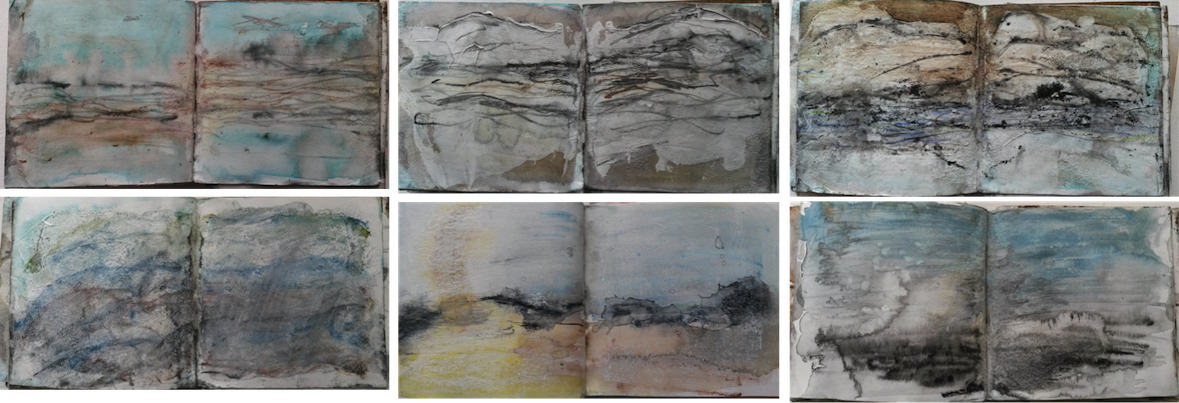
In no time at all, the sketchbook was full. I found it satisfying working spontaneously and subjectively in black and white expressing a sense of place but when I pushed myself further to work in colour, it was a challenge too far and unfortunately the sketching stopped. I suspect many of us have struggled during this pandemic in one way or another. I bet we’ve learned a lot about ourselves over this last year. I certainly have.

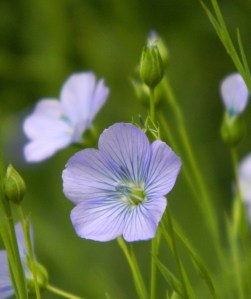
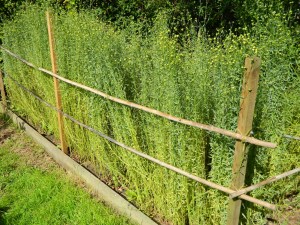
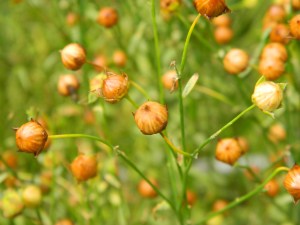
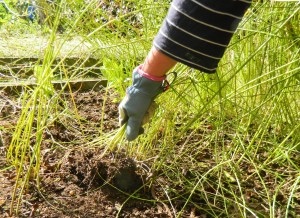
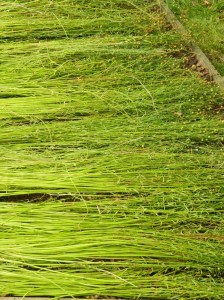
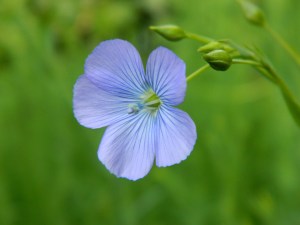
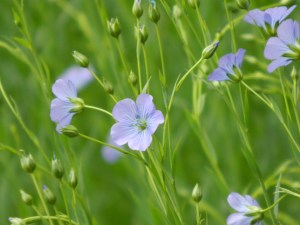
When I started growing flax over a year ago, I had no idea about the learning journey ahead of me, from growing, harvesting and retting the flax to breaking, scutching and hackling it. The time had come now to learn to spin the flax.
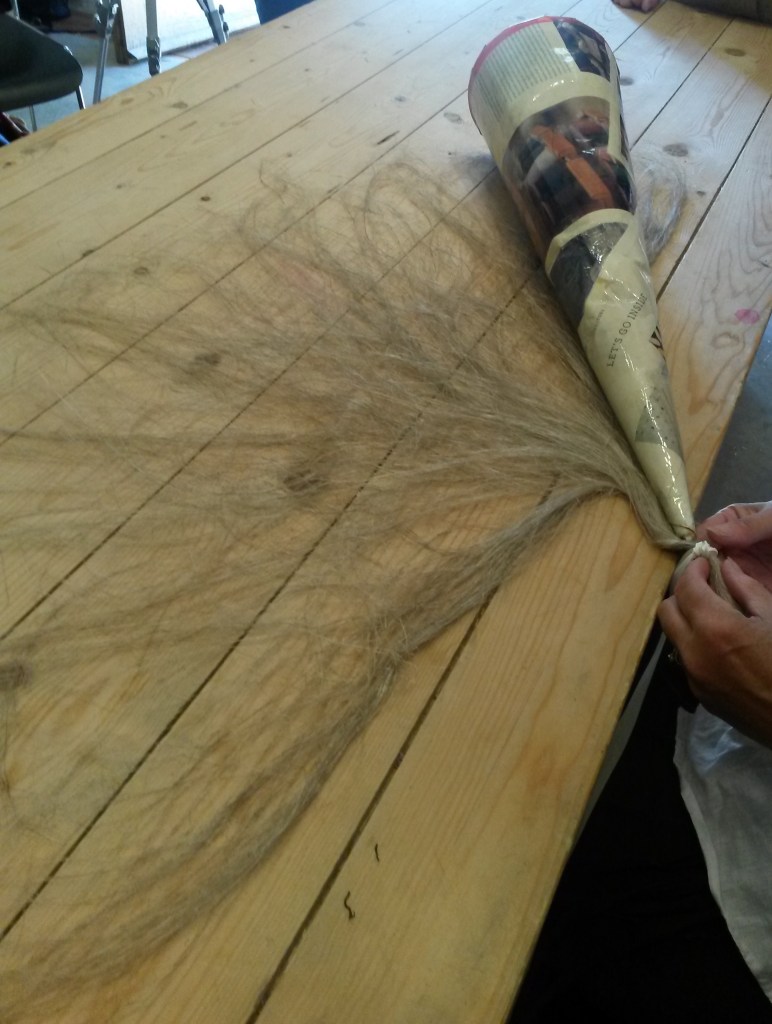
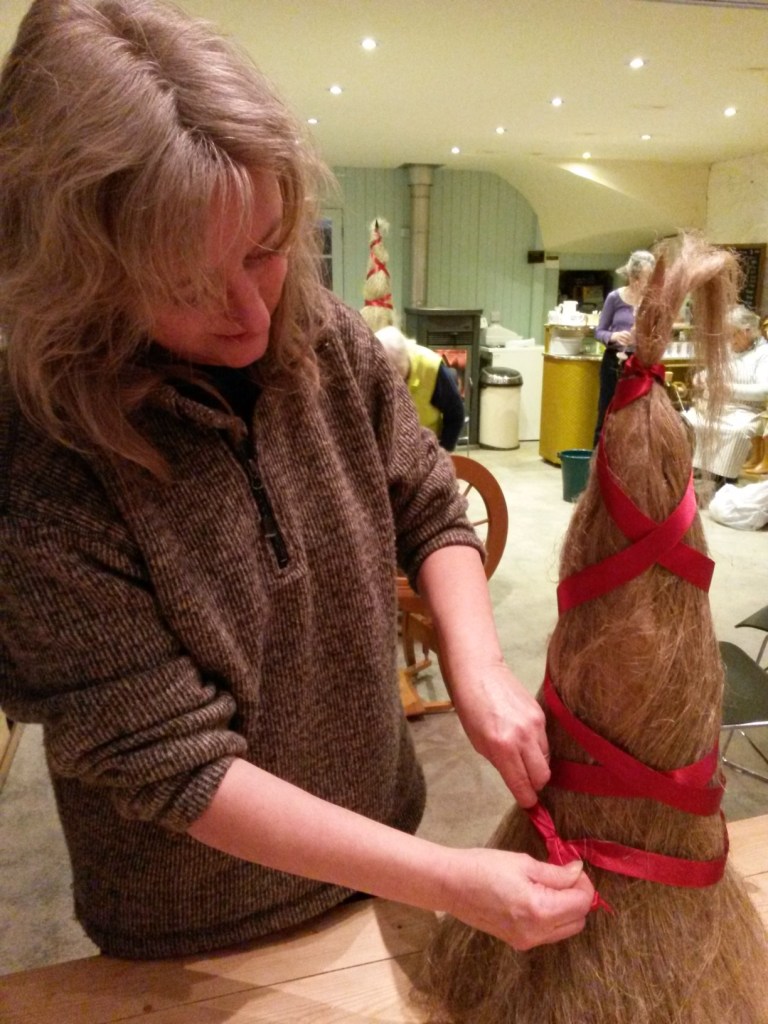
Knowing I’d grown my flax fibres from seed, they became very precious, so I wanted to preserve every last fibre to maximise its use. I had no idea what a distaff was or that there were many different types of distaff. I soon learned that the purpose of a distaff was to hold the unspun fibres and allow them to be pulled out in one direction. I believe you can also just use a tea towel over your shoulder by spreading the fibres across the tea towel first and then loosely rolling it up.
I am full of admiration of ‘proper’ spinners who can do the equivalent of tapping their head and rubbing their tummy at the same time. I started off with the drop spindle and I knew it got its name because the spindle is allowed to ‘drop’ down while the thread is formed. In other words, the weight of the drop spindle helps to pull down the fibres. What I hadn’t anticipated was that mine kept ‘dropping’ directly onto the floor more times than I dare reveal!

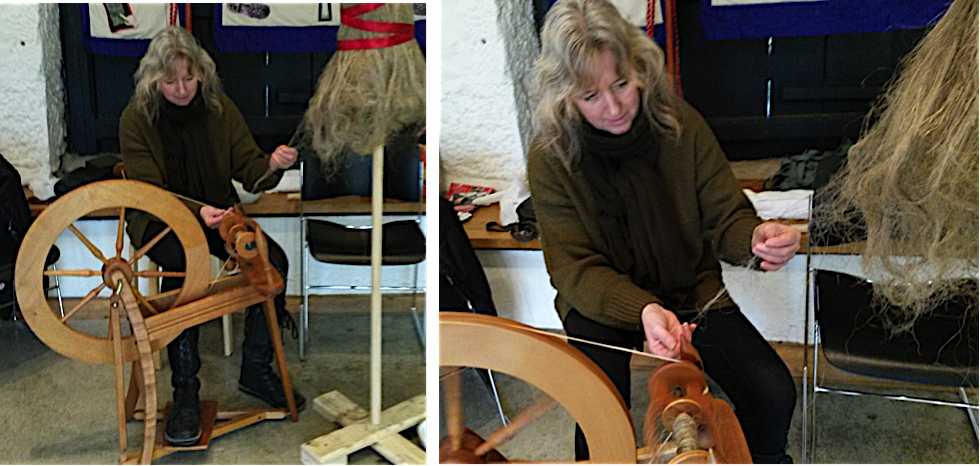
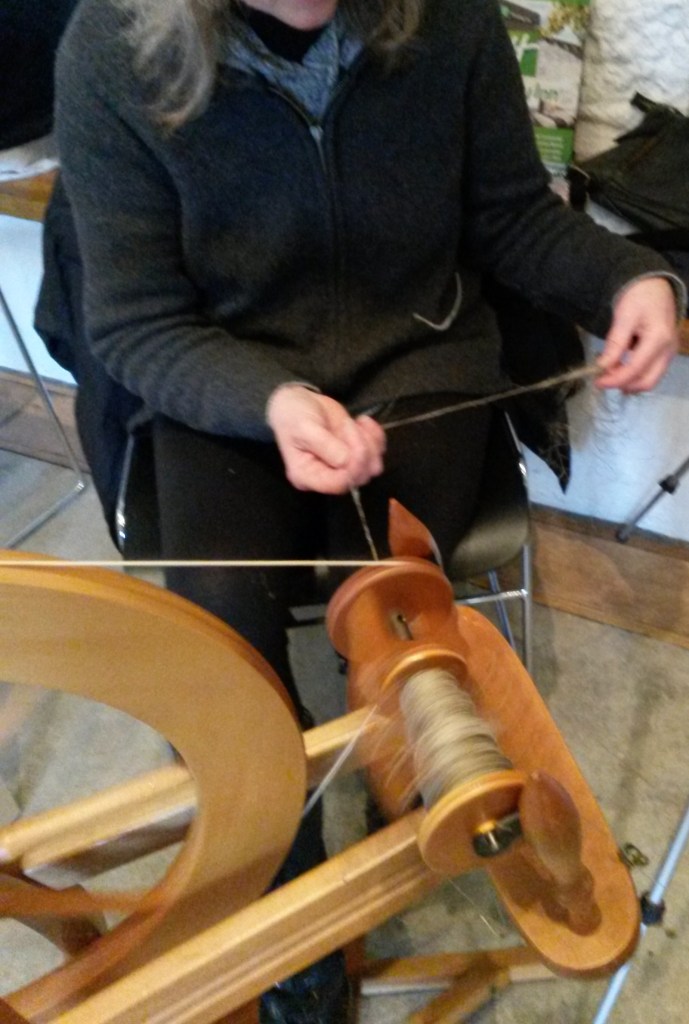
I quickly moved onto the spinning wheel courtesy of Stella Schofield Adams and again a steep learning curve. Spinning is when the fibres are drawn out and twisted together to form yarn and in this case linen yarn.
In medieval times, poorer families had such a need for linen yarn to make their own fabric and clothes that practically all girls and unmarried women would keep busy spinning. I didn’t realise that is where the word “spinster” originates.
The more I practised spinning the more I got the hang of it and once I got into the rhythm, I found it quite relaxing, rewarding and enjoyable. After a number of hours (or should I say days!) of spinning, my skill improved. It was hard getting consistency with the thickness of the spun yarn but I was quite delighted by what I produced.
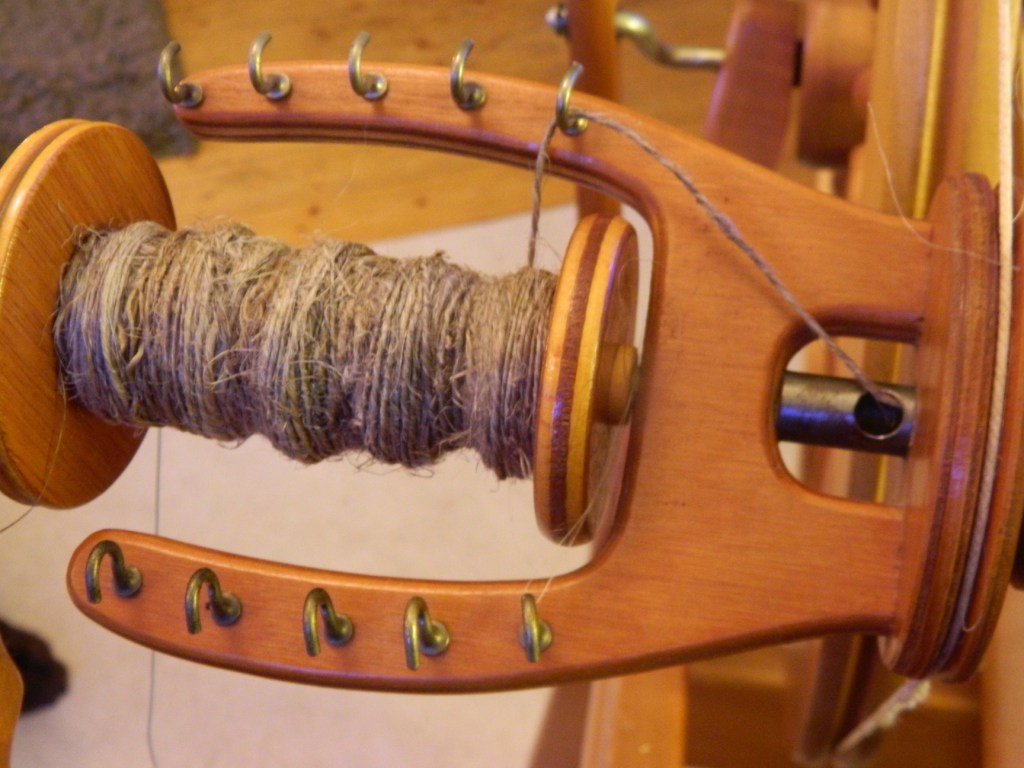
Certainly this project has and continues to present many challenges for me and I am still learning much. I can appreciate now how important it is to be thorough at every stage of the flax growing, harvesting and processing.
Being a novice flax grower, ‘retter’ and processor, there would inevitably be flaws in the fibres. Some of them might have been over retted and therefore not as silky as others. There were also still bits of shive that I hadn’t got rid of during the processing and this presented challenges when spinning. Although I appreciate and respect perfection and so often strive for it in many of life’s situations, I am drawn to ‘wabi sabi’ in my own practice, embracing the beauty of flaws and rawness.
Wabi, roughly means ‘the elegant beauty of humble simplicity’, and sabi, means ‘the passing of time and subsequent deterioration’. So very fitting for my practice. With my shive covered flax fibres I do like the variations, the added interest and the texture.
So, looking ahead towards 2021, I wish you all a happy, healthy creative year!
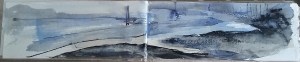


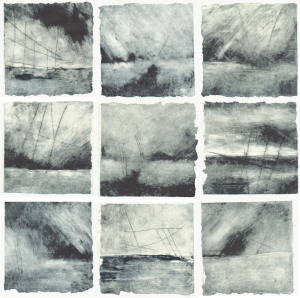
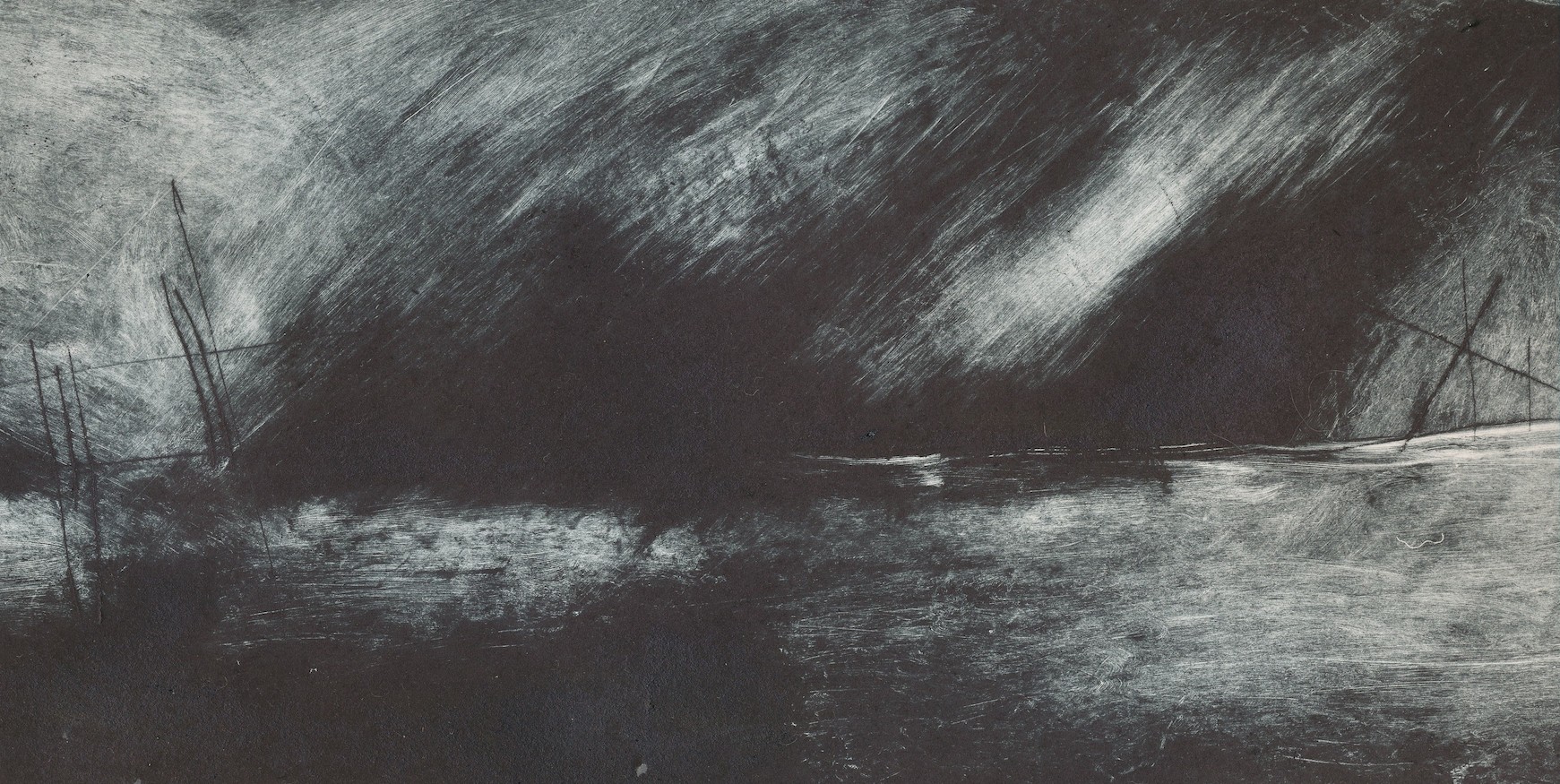
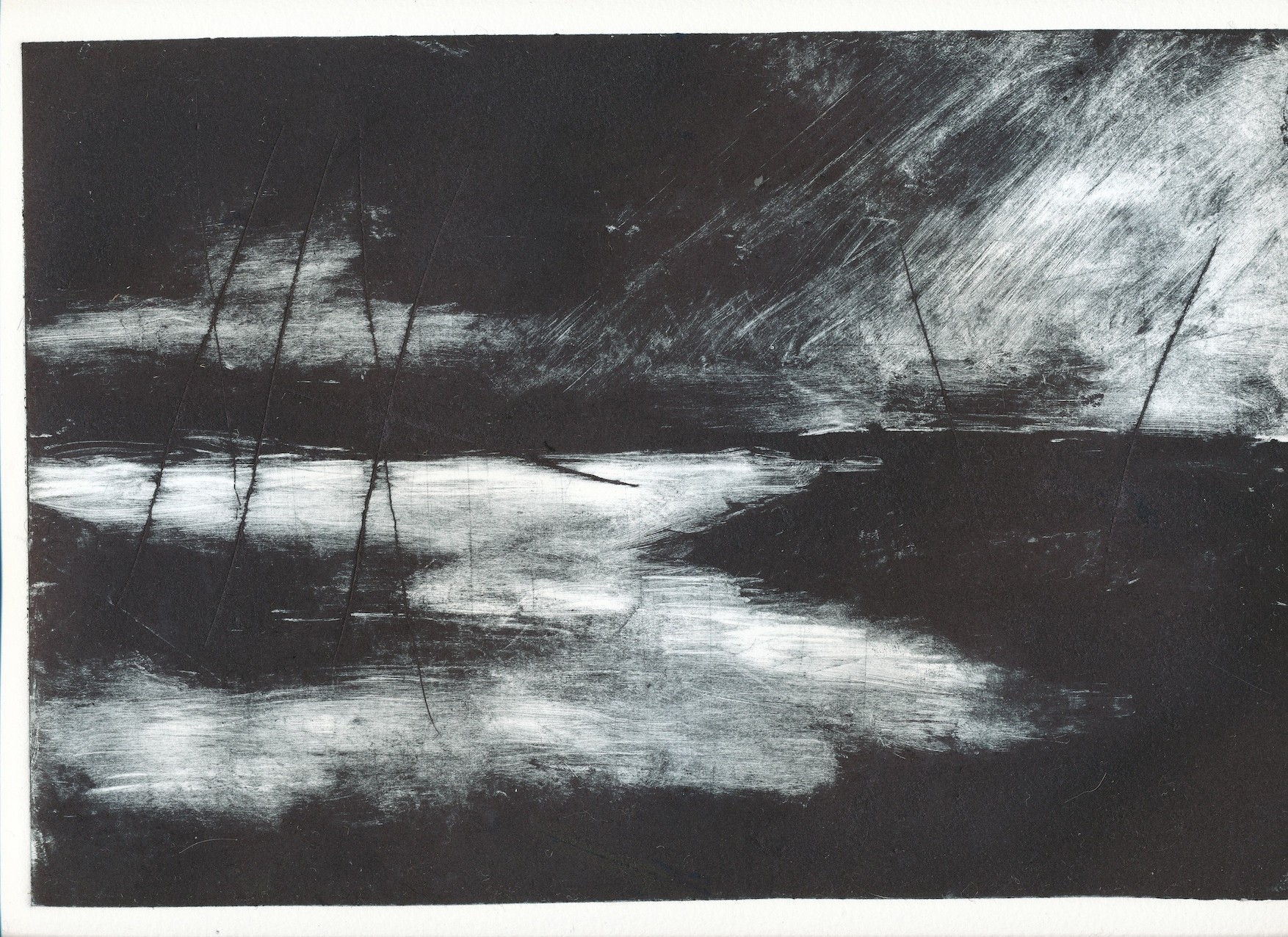
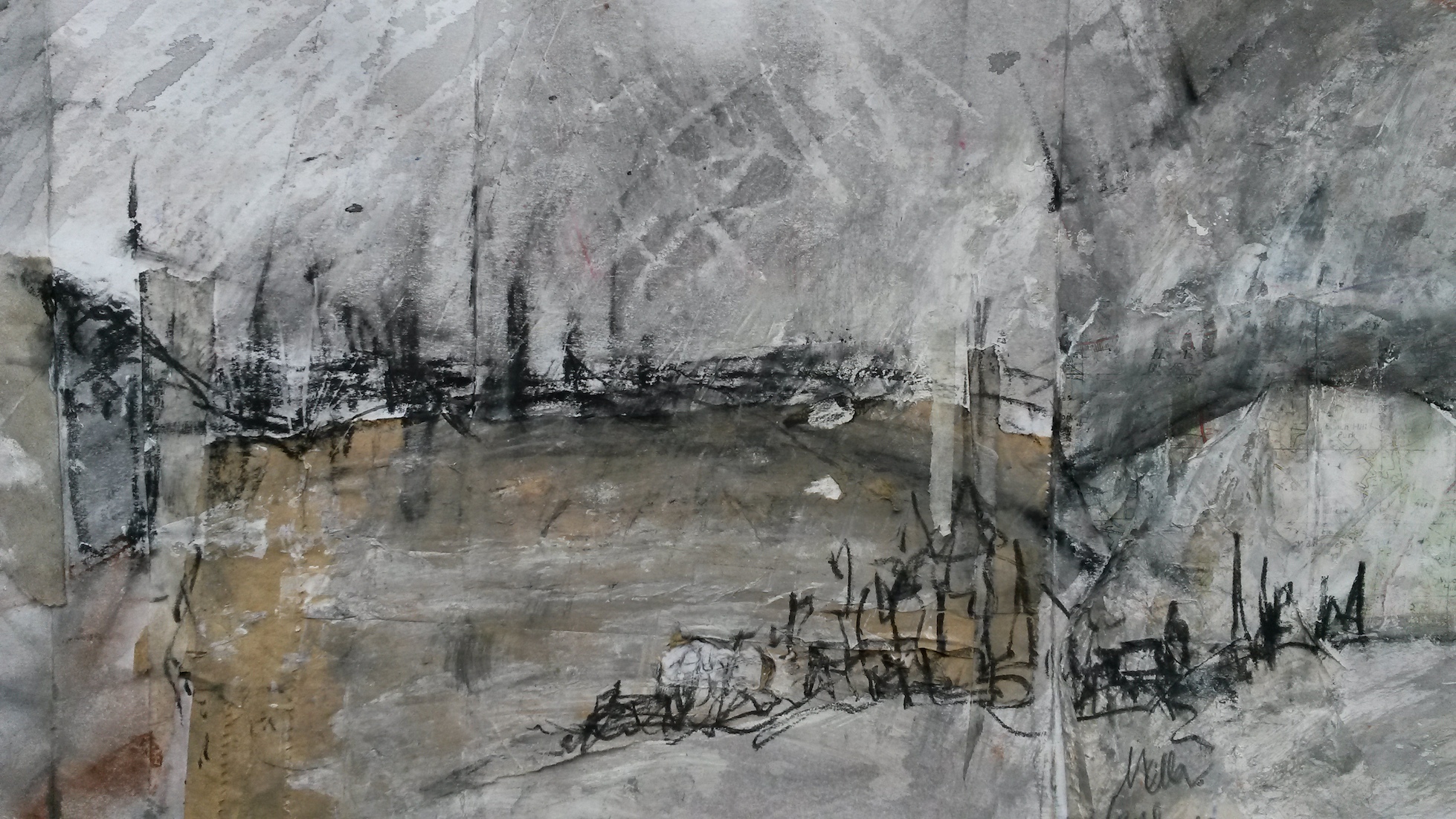
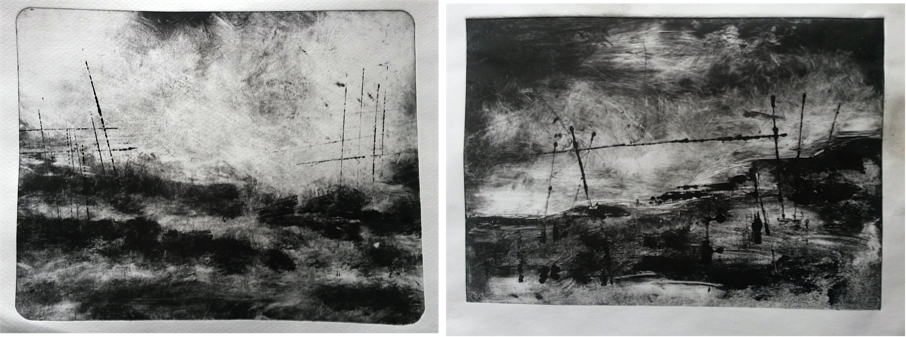
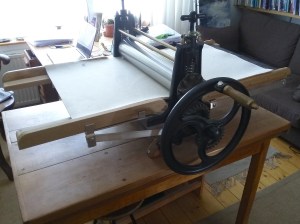 Before the lockdown I was pleased to have had one of my prints selected for the exhibition ‘Black and White’ at the Storey Gallery in Lancaster. This was a drypoint monoprint, based on the dynamic wild weather of North West Scotland.

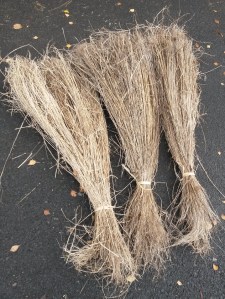

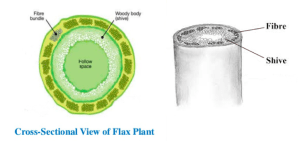


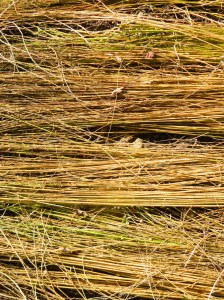
 I found that some of my fibres broke during the scutching stage suggesting that I might have over-retted some of my flax after harvesting it. The act of retting removes the


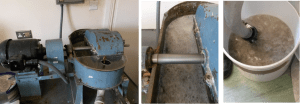
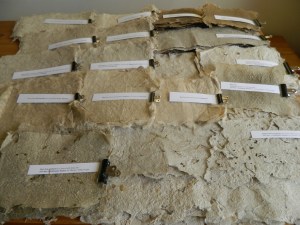
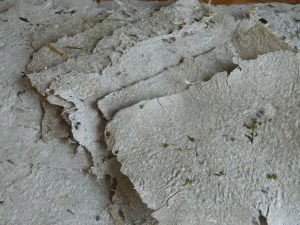
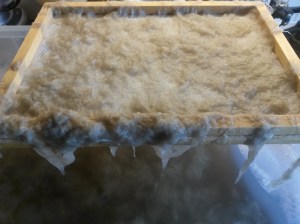
 When the paper I created from the Hollander Beater dried, it shrank and funnily resembled a poppadum. Even when I ironed it flat, it still had a crispiness which I wasn’t that keen on.
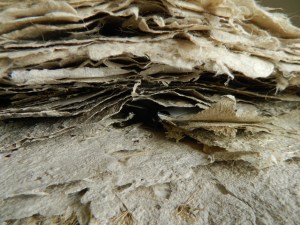 Needless to say, I continue to explore the humble food blender as this gives a much softer paper more akin to textiles. There is still certainly much to learn and explore with this ‘liquid cloth’.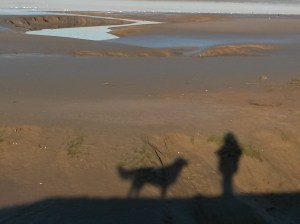




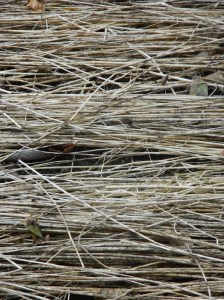
 I have now



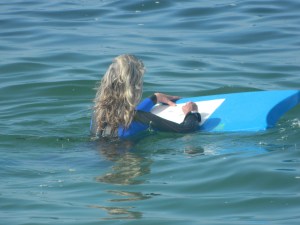
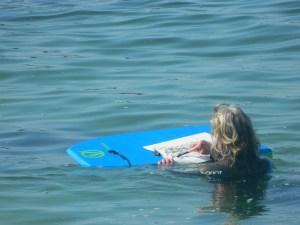
 I remember as a child my parents would often struggle to get me out of the water, whether it was from the sea, a lake or a swimming pool, I would spend hours in it. I’m at my happiest in and near water. It’s that primal, visceral experience which I love. The immediate relationship and connection with the environment. The liberation that comes with the weightlessness, entering a private world where it is just you and the water.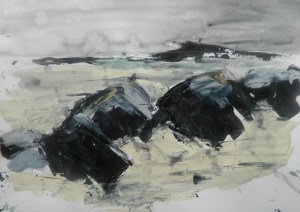
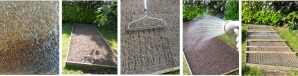



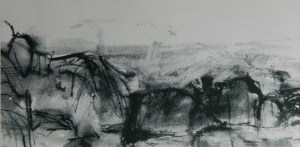

 I think screen printing can be an effective way to produce editions of an image although I still have very much to learn. I think my heart will always remain with the technique of mono-printing, although I believe you can paint directly onto the open mesh screen which I might explore in the future.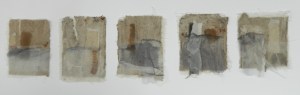
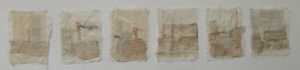
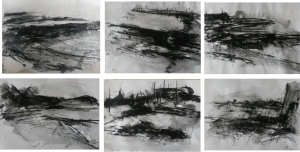
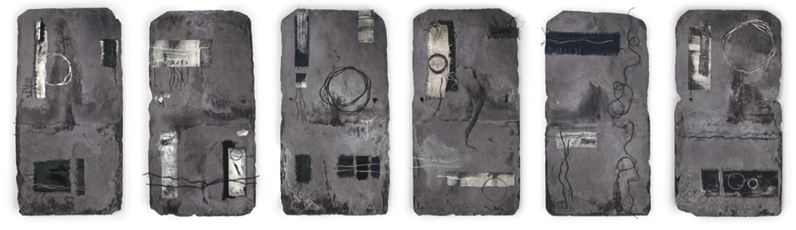
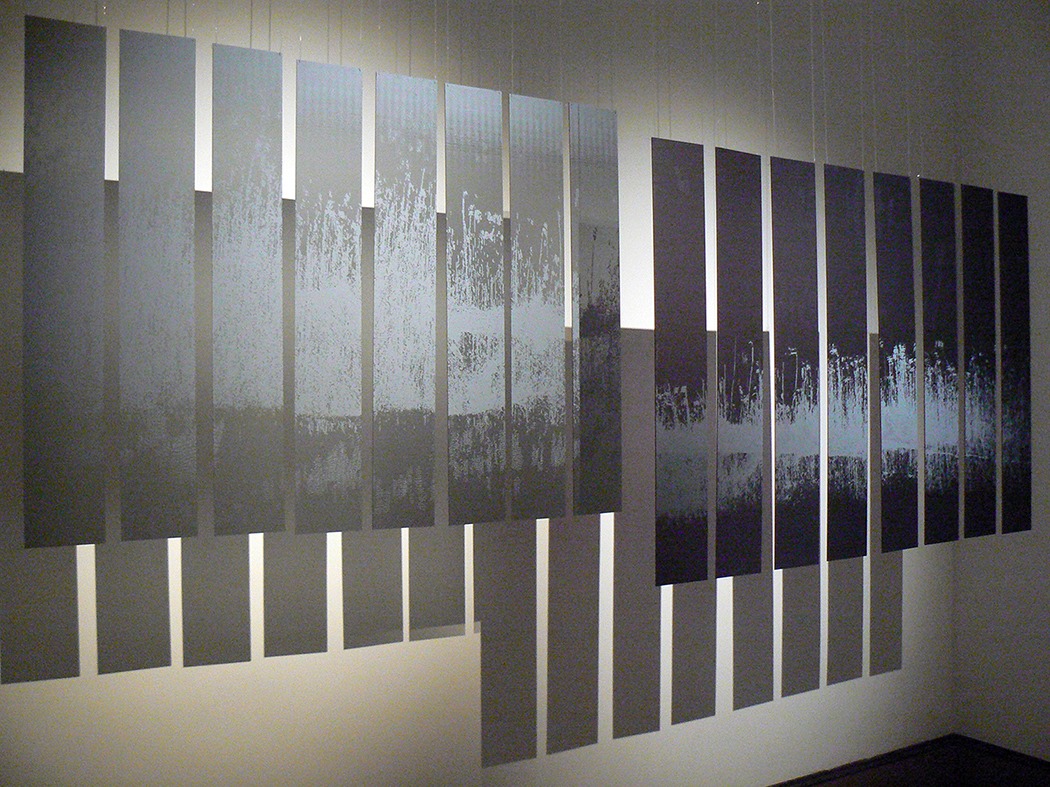
 I’m conscious that sequences keep emerging in my work. I like the idea of a set of related items that follow each other in a particular order. In looking at the definition of what a
 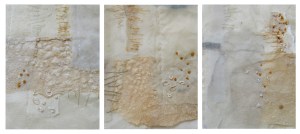 I remember from an exhibition some years ago, I found the philosophy and approach of practitioner Jane Rushton (2010) inspiri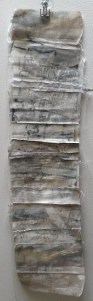
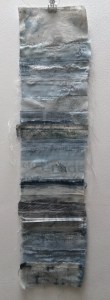
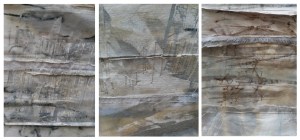
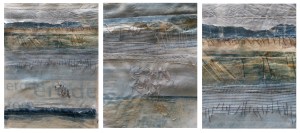 Remembering back to my involvement in Alice Kettle’s Stitch a Tree project, I really enjoyed the stitching aspect of these sequences and found the whole stitching process relaxing and contemplative. In Claire Wellesley Smith’s book Slow Stitch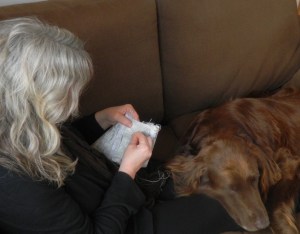
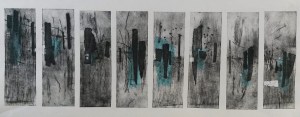


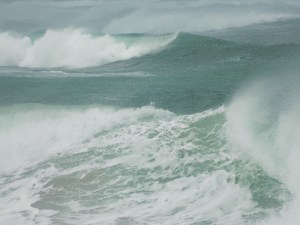
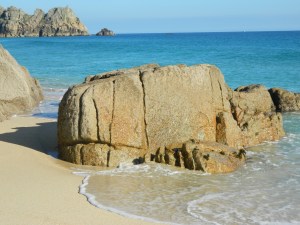
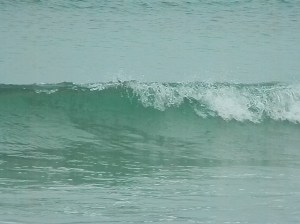
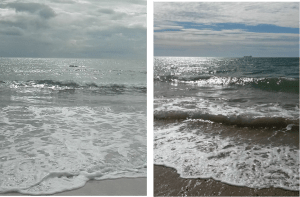
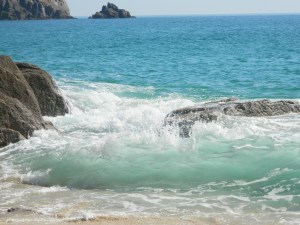 I spent some time in Cornwall recently, which was a bit of a change from Scotland. Thinking it would be good to experience a different kind of coastline, I went hoping for wild weather and wild seas to capture through drawing a dynamic sense of place. The weather unfortunately was too kind with sunshine and light winds but the North Atlantic swell didn’t disappoint.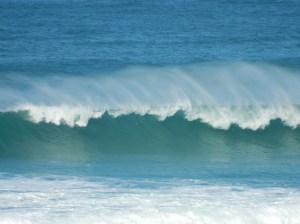
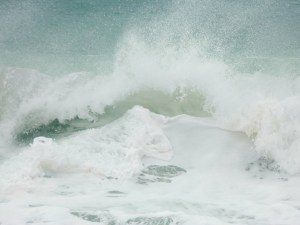
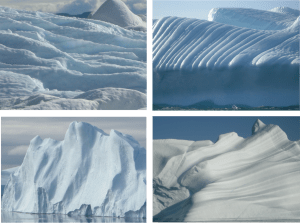
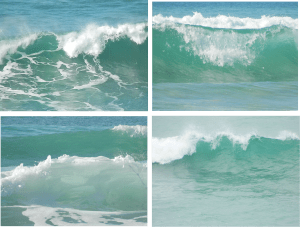 I can sit and watch the waves for hours. I get fixated. Years ago, I spent some time in Greenland and similarly I couldn’t take my eyes off the ice bergs. After 200+ photos of them I vowed to put my camera away and take no more. But then I saw another and another and couldn’t resist. Each one was unique in shape, colour, texture and light.

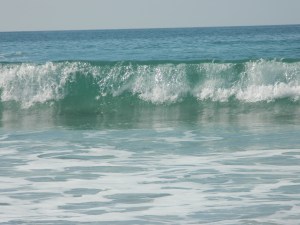 It’s interesting to observe the
 I don’t know if it’s a genuine quote by Van Gogh but I can relate to “my sketchbook is a witness of what I am experiencing, scribbling things whenever they happen”.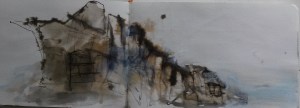
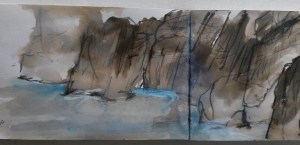
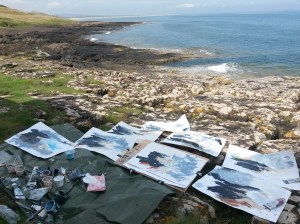
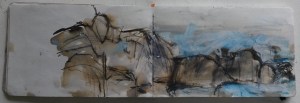 After walking the coastal path, often high up on the cliffs from Porthcurno to Cape Cornwall. I realised I needed to be much closer to the water to feel its full impact. Most of all at the level of the incoming tide and surf to smell the sea air, taste the salt on my lips, hear the crashing of the waves, filling all my senses. That whole sensation and physicality of being there and being exposed to the elements first hand. The wind and the salt spray in your face and on the sketchbook page are all part of the creative experience, trying to gain an emotional response to place.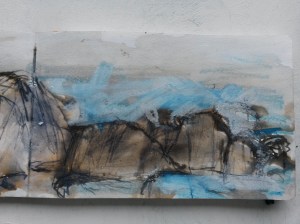


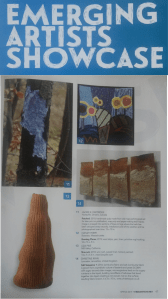 On a completely separate note I was delighted that one of my pieces of Kombucha work Salt Sequence 1 was chosen as 1 of 15 works by ‘Emerging Artists’ in the Fiber Art Now magazine Vol 8 Issue 3 Spring 2019.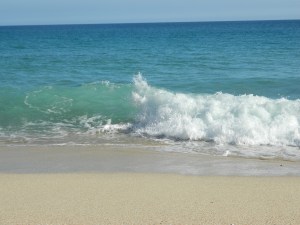


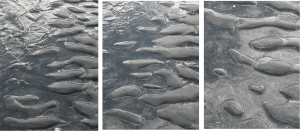
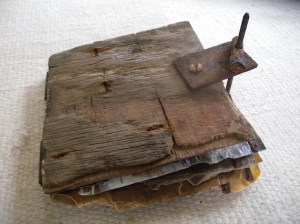
 Like the artist Antoni Tapies, I enjoy utilising ‘mundane, everyday materials’ that often go unnoticed (3.) and light-heartedly remember the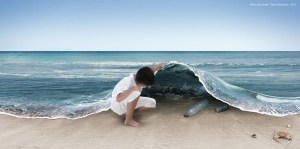

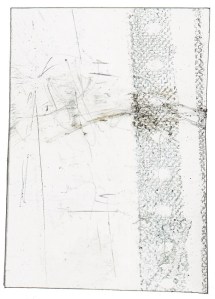
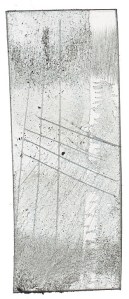
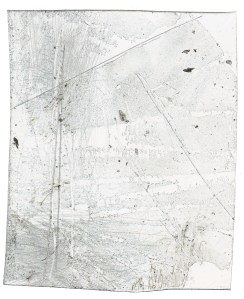
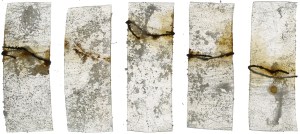
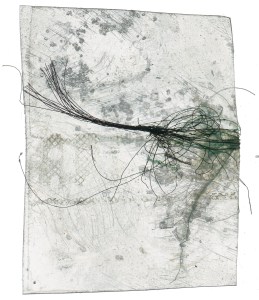
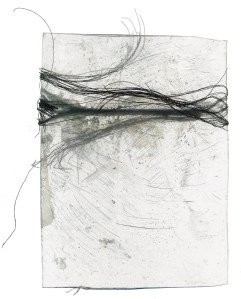
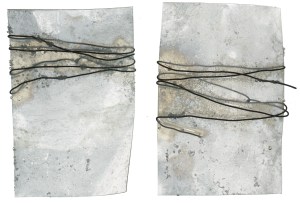
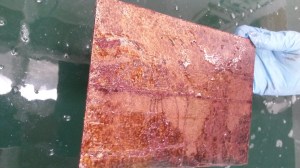
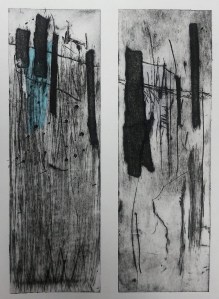
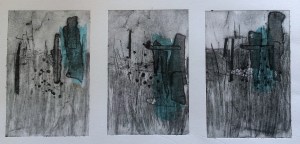
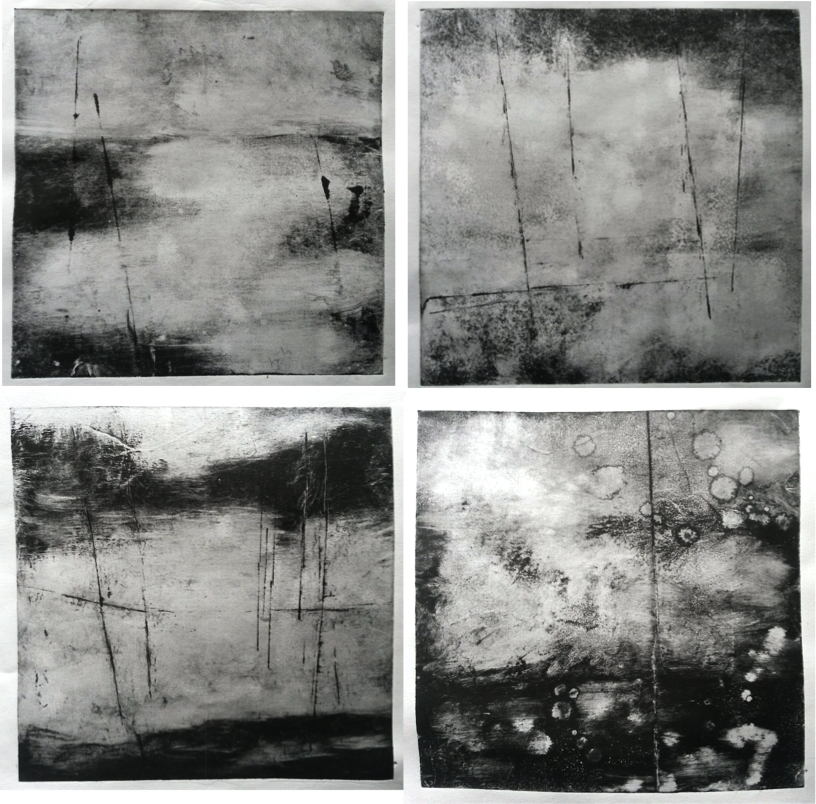
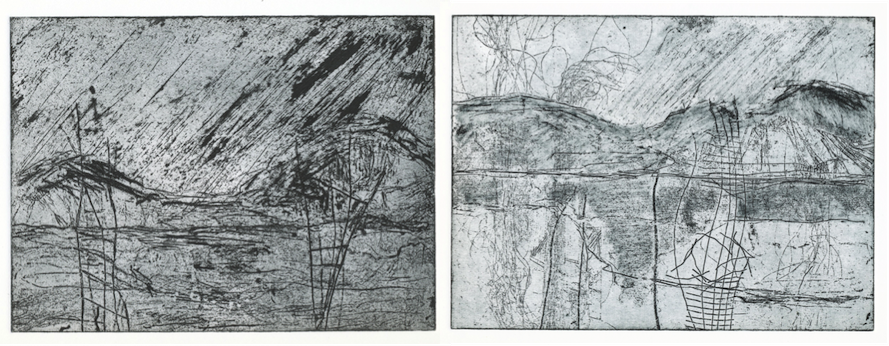 It was interesting to observe that I treated the etching plate as I would a monotype and through the inking process, tried to translate my emotional connection to the landscape. I wanted to capture light, mood and atmosphere.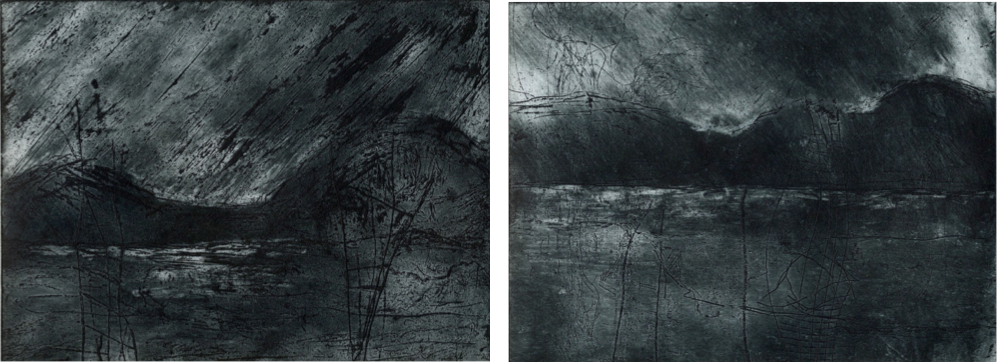
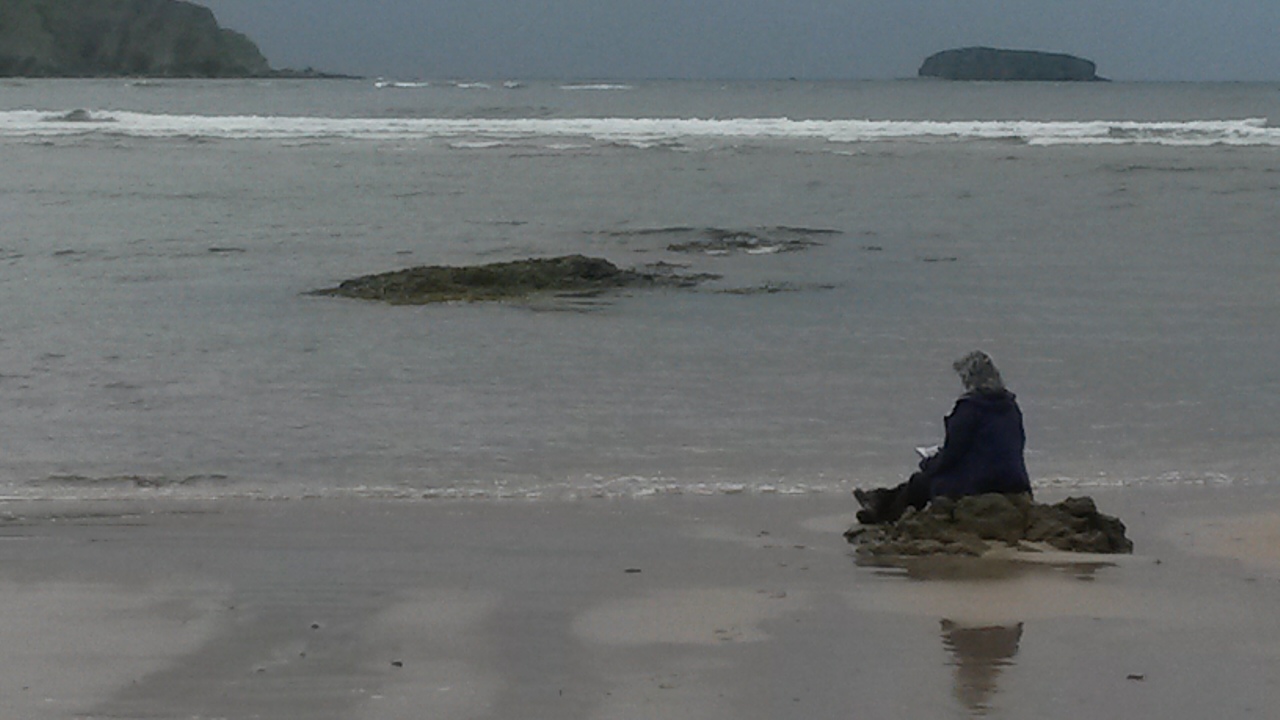
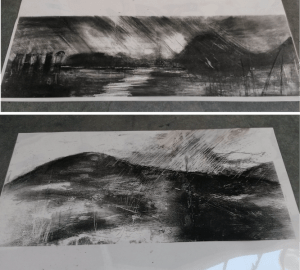 Spending time along the West coast of Scotland and the Hebrides feeds constantly into my print work and my drawings. There is something really special about being out on a remote beach, far way from anyone. Immersed in the landscape and exposed to the extreme weather of strong winds, driving rain and moody skies. I enjoy watching storms forming and developing before my eyes, changing by the minute.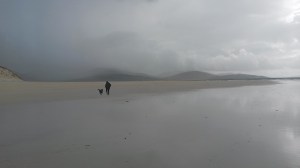
 There is no substitute for physically being there, tasting and smelling the salt on my skin, feeling the cold wind penetrate my clothes. Nature’s elemental forces at their best. I want to capture that whole emotive and sensory experience of being there by the sea in all weathers and although my photographs provide a memory and capture a ‘moment in time’, they seem to lack something.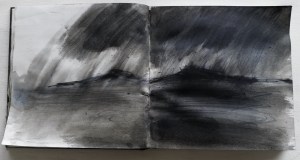
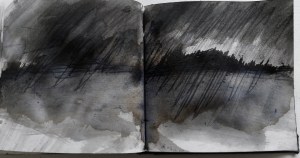
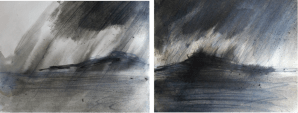 I’ve mentioned previously that when my working process begins, the end is undetermined and unknown. The journey evolves. I recently came across an interesting word online ‘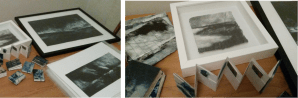


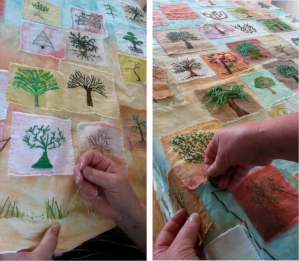
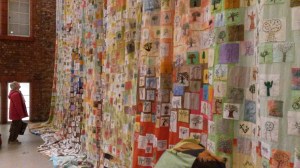
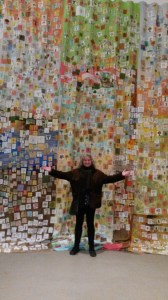
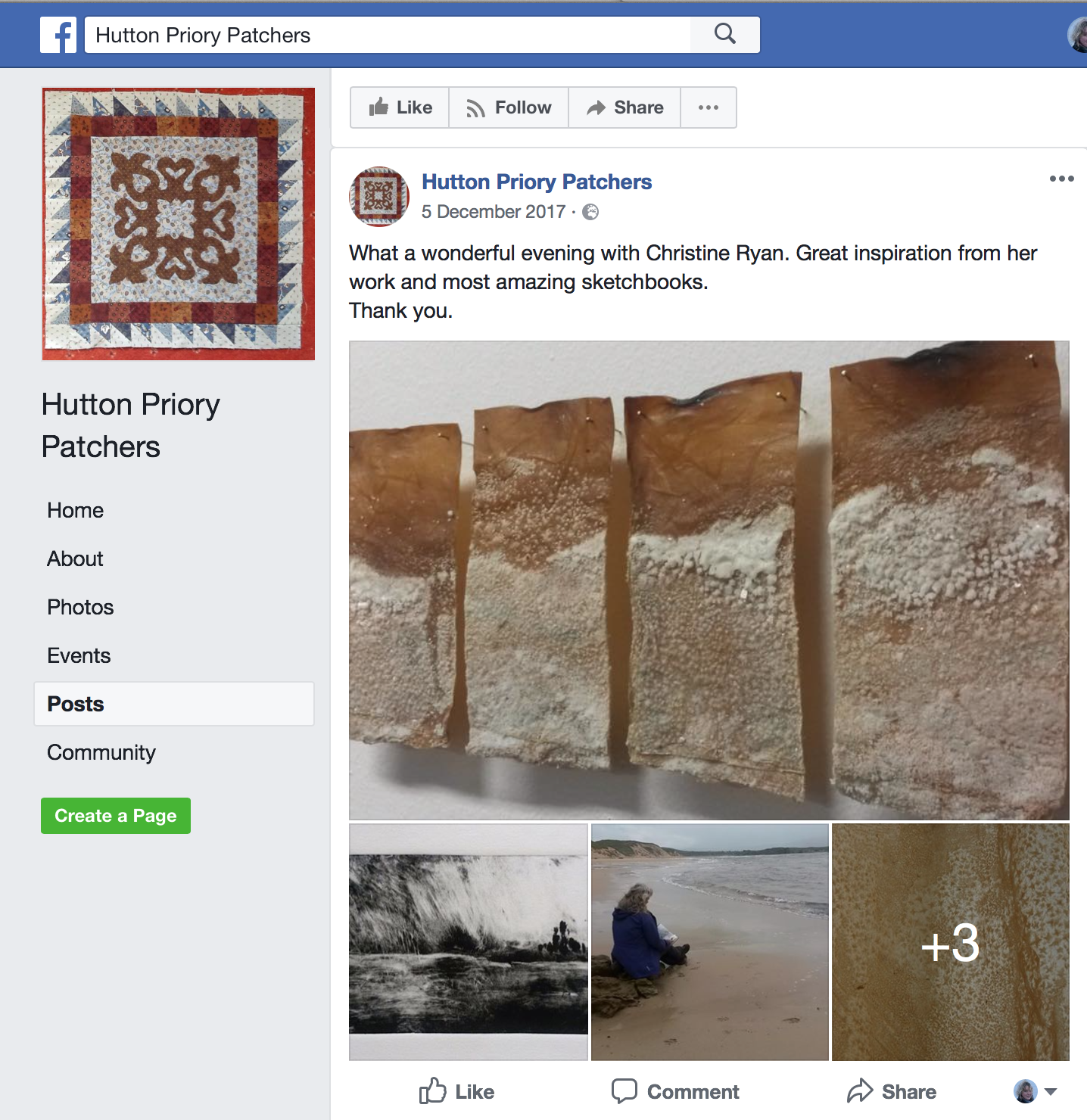
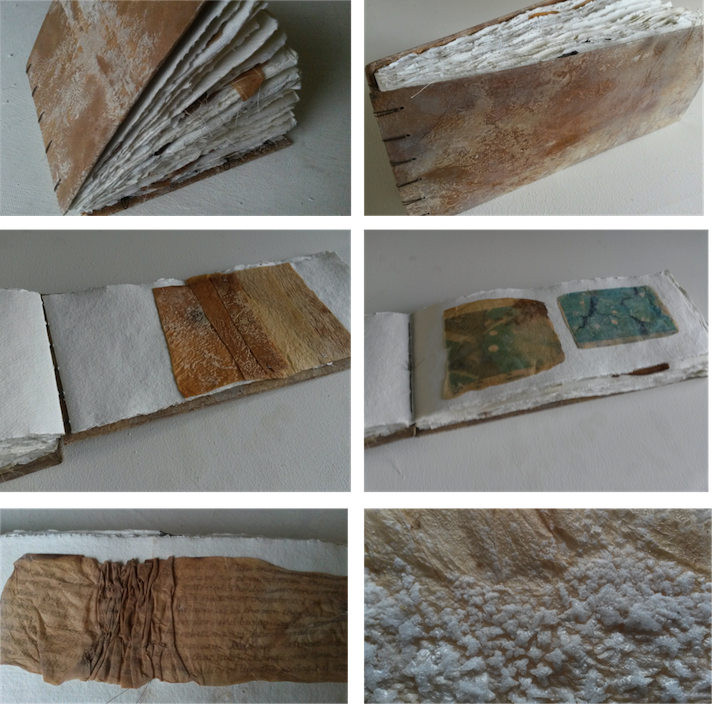
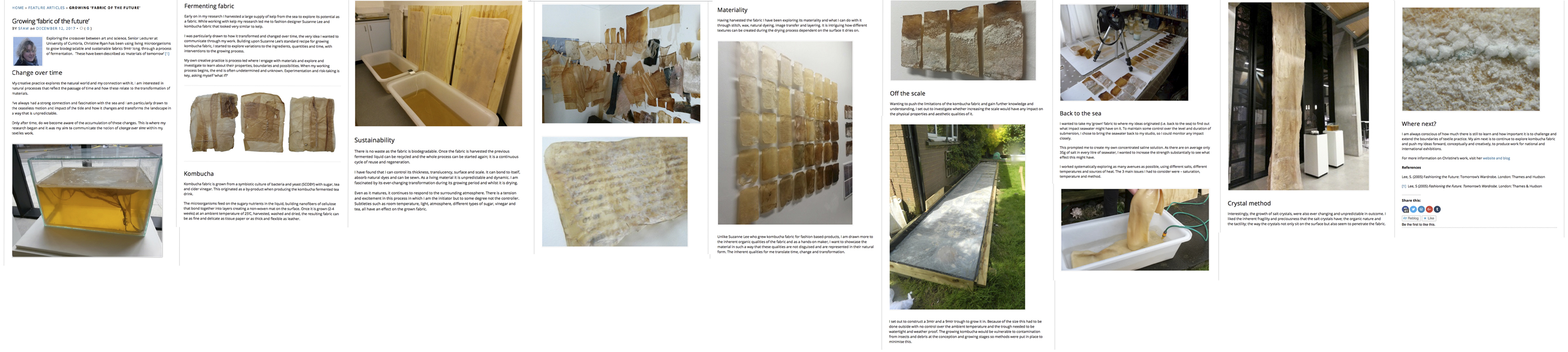


 Since early December last year, running parallel with my own practice, I have been working for textile artist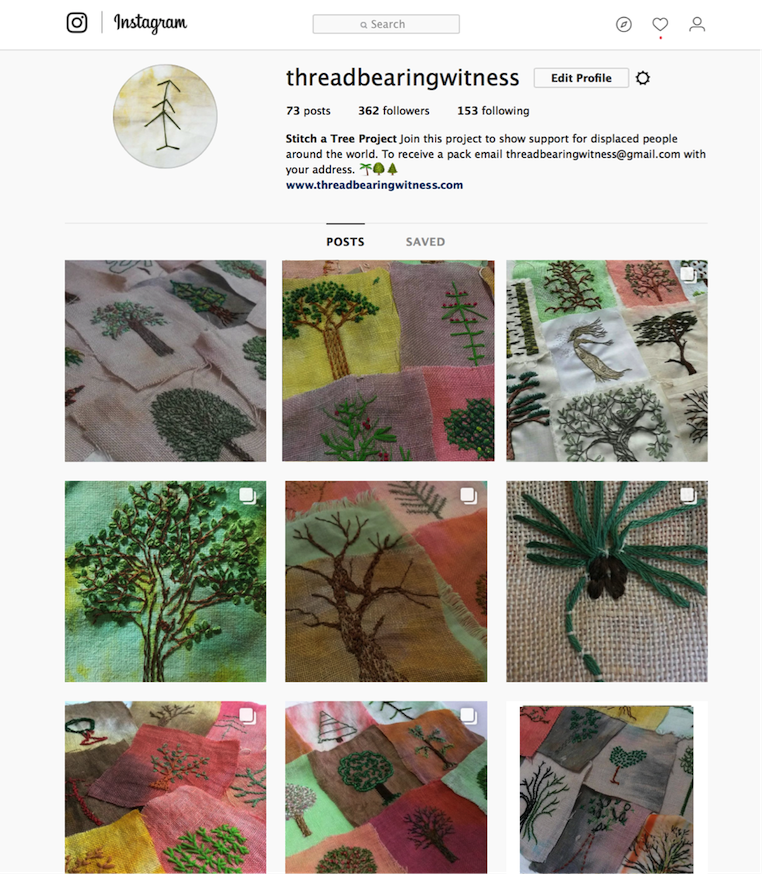
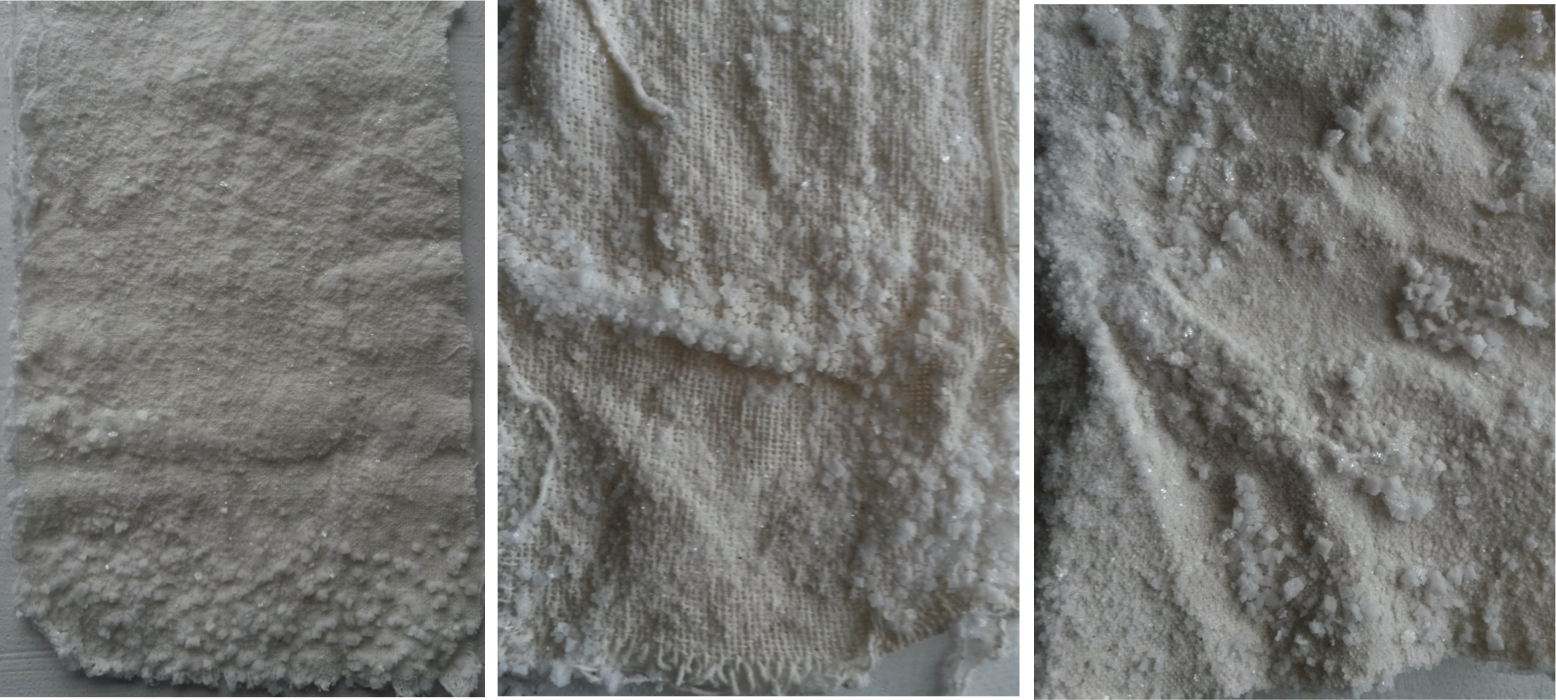
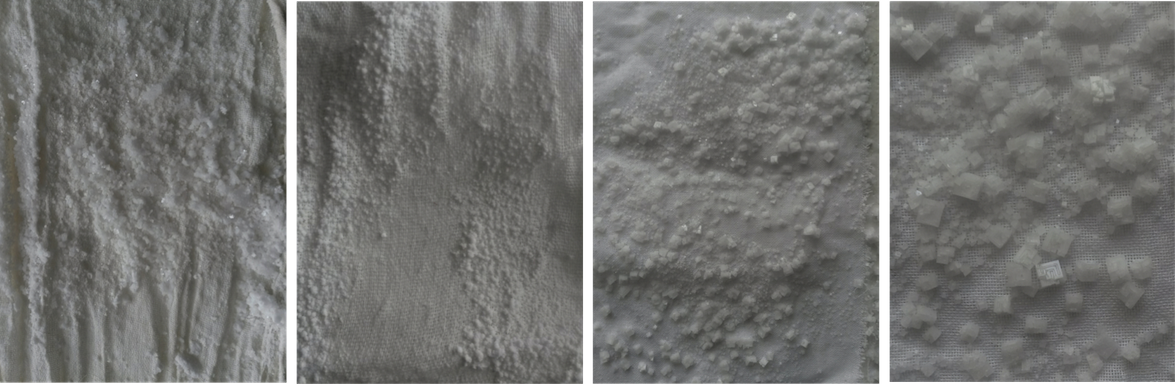



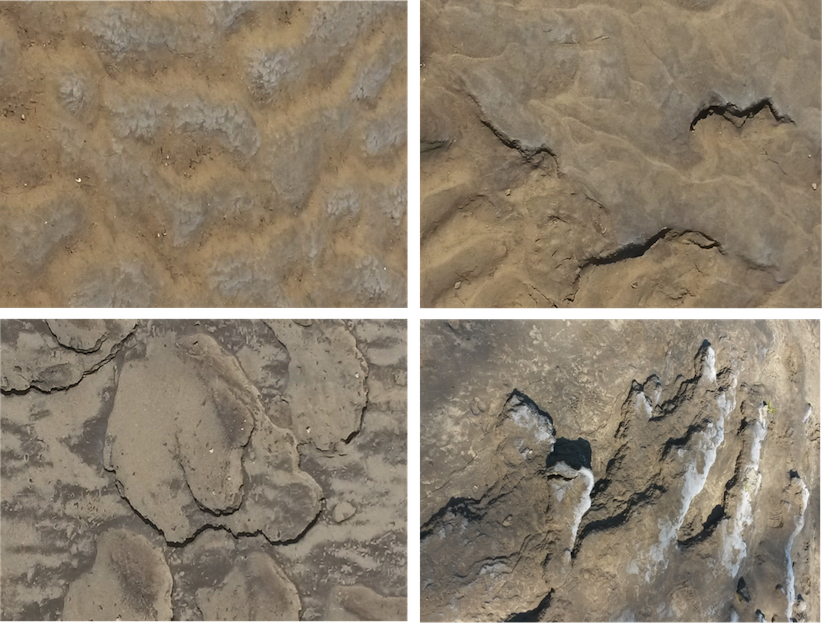
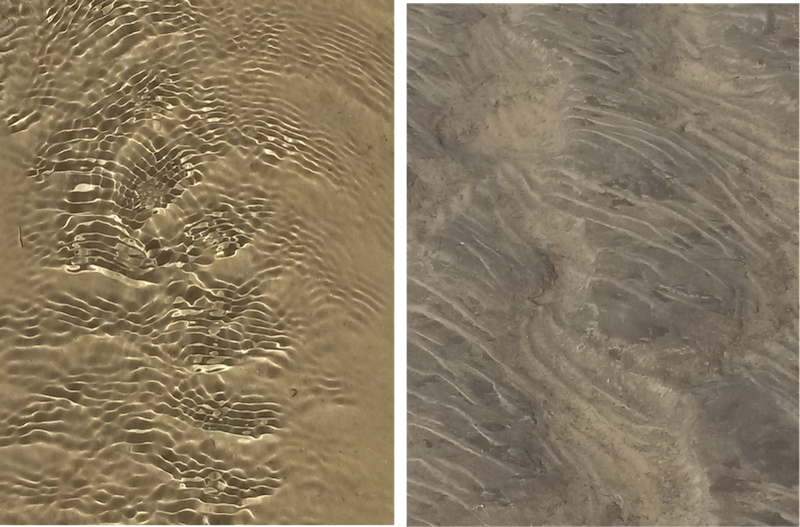 As Jacques Cousteau once said… the sea, once it casts its spell, holds one in its net of wonder forever and in the words of Nancy Price in 1947 … I have a passion for the sea, a passion which never abates. It whispers in my ear things that cannot be expressed in words.
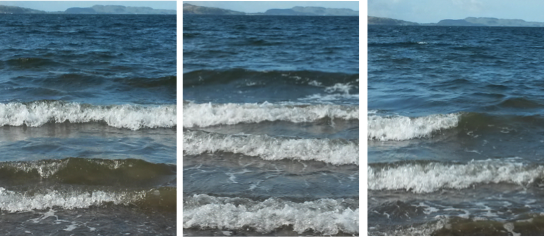 l am still drawn to sequences and wherever I go I keep seeing them, not only within images of the sea and the environment but also within other artists work.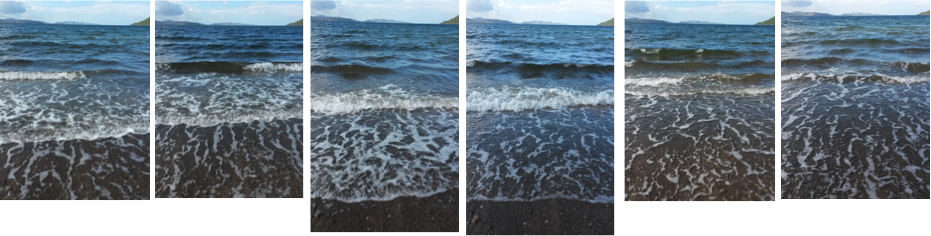

 Christine Ryan
You must be logged in to post a comment.